In the architectural puzzle of a period home, a bespoke kitchen for a narrow victorian terrace is never just a luxury; it's the only way to truly unlock a property's potential. You've likely felt the frustration of trying to force standard, off-the-shelf units against walls that haven't been straight since the nineteenth century. It's a common struggle to balance the desire for a high-end aesthetic with a layout that often feels more like a dark corridor than a functional heart of the home.
It's time to be inspired by a thousand new possibilities when you stop fighting your floor plan and start embracing it. We'll show you how clever spatial planning and 2026's "warm minimalism" trend can turn a cramped galley into an airy, light-filled masterpiece. With high-end London renovations now reaching £2,500 per square metre and material costs sitting 39.1% above 2019 levels, making the right design choices is essential. This guide covers everything from smart storage that hides clutter to the latest 2026 building regulations; we'll ensure your investment creates the interior of your dreams.
Key Takeaways
- Learn how a bespoke kitchen for a narrow victorian terrace eliminates "dead zones" and transforms awkward side-return layouts into seamless, functional spaces.
- Discover the design secrets behind using handleless cabinetry and specific light-reflective palettes to make even the narrowest rooms feel airy and expansive.
- Navigate your 2026 renovation with confidence by understanding how to balance a high-end budget with the structural realities of a period home.
- Explore a thousand new possibilities for your interior by partnering with Custom Interiors for expert spatial planning in West Midlands properties.
The Anatomy of a Narrow Victorian Terrace Kitchen
The classic Victorian terrace is a triumph of nineteenth-century engineering, yet its kitchen layout often feels like an afterthought. Most of these homes feature a "side-return" or "outrigger" design. Originally, this narrow extension was built to house a scullery and coal store, keeping the heat and smells of cooking away from the main living areas. Today, this architectural legacy leaves homeowners with a space that is frequently no more than 2.4 metres wide. Traditional Victorian architectural styles prioritised separate, functional zones, which explains why your current kitchen might feel more like a dark passage than a social hub.
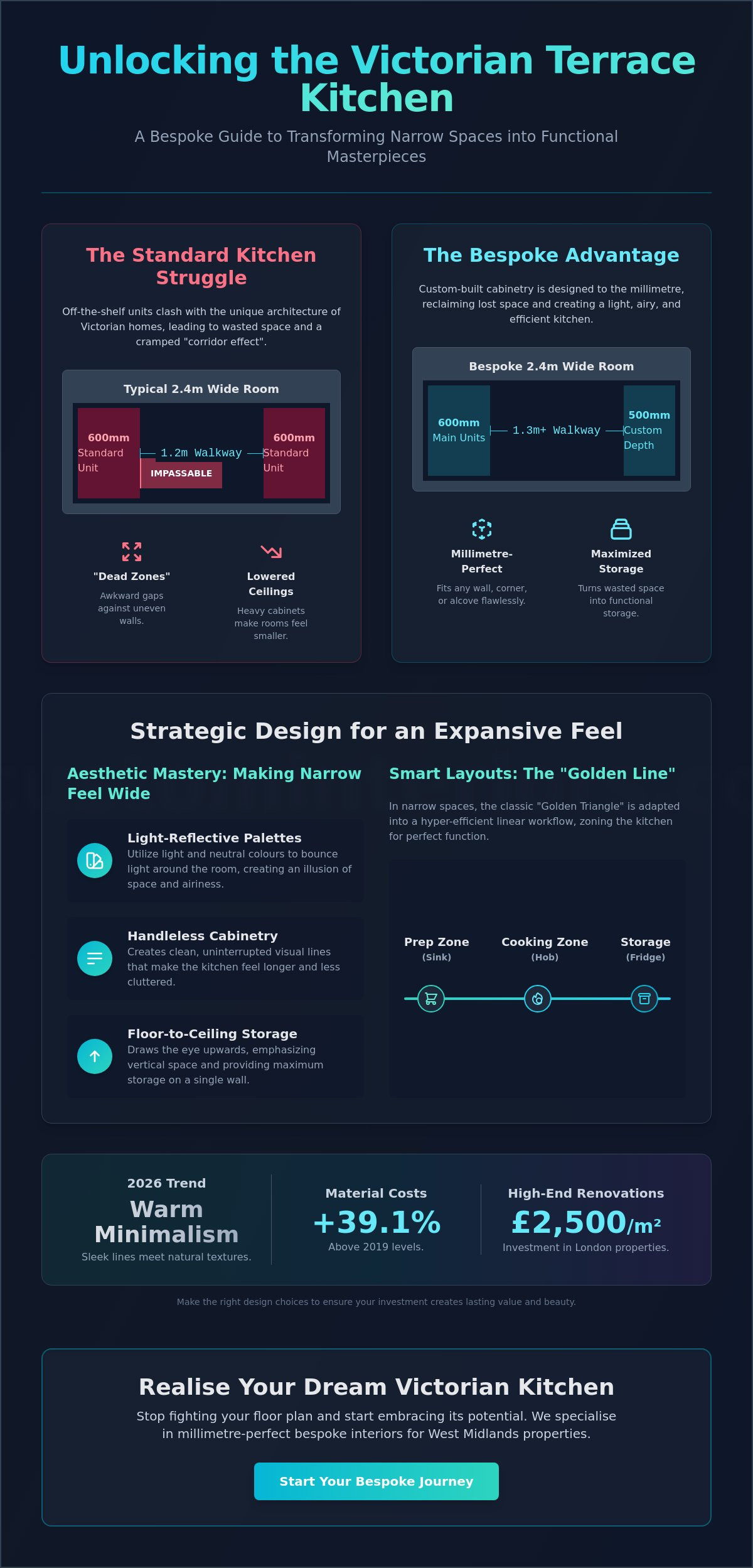
When you attempt to fit a standard kitchen into this footprint, you're fighting against the building's history. Off-the-shelf units are manufactured to a rigid 600mm depth. In a room only 2400mm wide, placing units on both sides leaves a walkway of just 1.2 metres. Once you open an oven door or a dishwasher, the room becomes impassable. Furthermore, Victorian walls are rarely straight. Standard cabinets leave awkward gaps or "dead zones" where they meet uneven masonry or sloping floors, wasting precious millimetres in a room where every centimetre counts.
Our bespoke philosophy is different. We don't ask you to choose from a catalogue and hope it fits. We design for the room you actually have. It's time to be inspired by a design process that views your home's quirks as assets rather than obstacles. A bespoke kitchen for a narrow victorian terrace allows us to reclaim the space that mass-produced furniture simply ignores.
Why Standard Kitchens Struggle in Period Terraces
The most common issue in these properties is the "corridor effect." This happens when heavy, dark cabinetry lines both sides of a narrow room, making the ceiling feel lower and the walls feel closer. Standard units also struggle with the specific structural anomalies of the era. You might have a low windowsill that sits below the standard 900mm worktop height, or a chimney breast that creates a shallow alcove. Choosing a bespoke kitchen for a narrow victorian terrace means your cabinetry is built to flow around these features seamlessly. Bespoke cabinetry is the only solution for achieving millimetre-perfect spatial efficiency in a non-standard room.
Turning Victorian Constraints into Design Features
We believe your home's original features should be celebrated. An original chimney breast is the perfect location for a high-end range cooker, creating a natural focal point that honors the home's heritage. Where a standard unit would require an awkward filler panel, we create custom-depth cabinetry. We might design units at 500mm depth on one side of the room to widen the central walkway, ensuring the space feels open and easy to move through. We also integrate period-appropriate details, such as elegant cornicing or shaker-style doors, that mirror the craftsmanship found in the rest of your home. It's about creating a thousand new possibilities for a space that previously felt limited by its own walls.
Strategic Layouts: Maximising Every Inch of Your Side-Return
Choosing the right layout is the most critical decision in your renovation journey. It's the difference between a kitchen that feels like a bottleneck and one that flows with effortless elegance. A bespoke kitchen for a narrow victorian terrace demands a strategic approach that prioritises movement without sacrificing storage or style. Traditional layouts often fail here because they don't account for the unique, elongated footprint of a period property. By customising the cabinetry to the exact dimensions of your room, we turn a "corridor" into a curated culinary space.
In these narrow environments, the "Golden Triangle" of the fridge, sink, and hob must be adapted. Instead of a traditional triangle, we often design a "Golden Line" or a tight L-shape. This ensures you aren't walking miles between your prep area and the oven. To make the space truly work, we focus on three distinct zones:
- The Prep Zone: Centred around the sink and integrated waste management.
- The Cooking Zone: Housing the hob, oven, and spice storage for immediate access.
- The Social Zone: Often a breakfast bar or a small dining nook at the garden end of the room.
The Modern Galley: A Masterclass in Efficiency
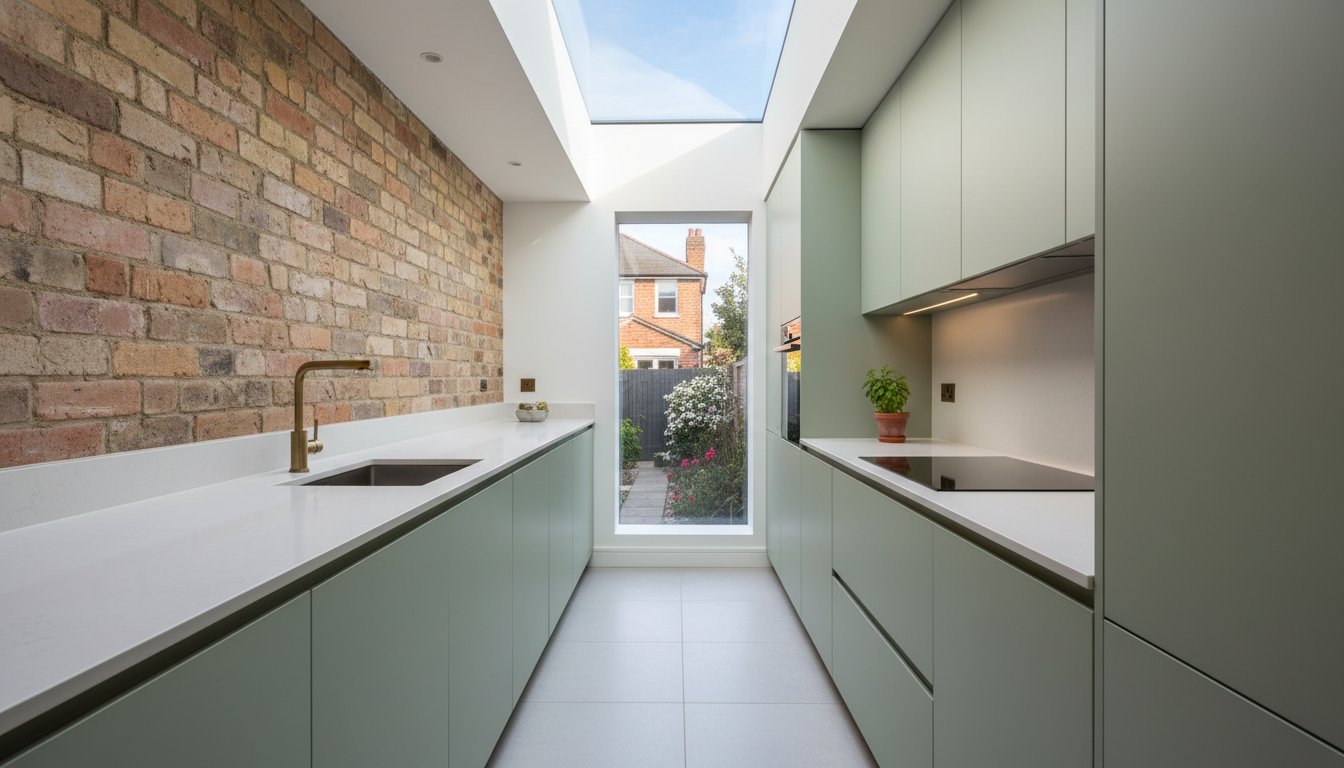
For those seeking a high end kitchen renovation, the modern galley offers a sleek, handleless aesthetic that creates an uninterrupted visual line. We often recommend floor-to-ceiling cabinetry on one wall. This "wall of furniture" approach hides appliances and clutter, freeing up the opposite wall for slimline units or even open shelving to keep the eye level clear. Placing the sink and hob on the same long run is a common choice in narrow terraces, provided there's at least 600mm of workspace between them for safety and functionality.
Extending Your Vision: Side-Returns and Planning
If your budget allows for structural changes, a side-return extension is the ultimate way to transform your home. In the West Midlands, many Victorian terraces fall under Permitted Development rights, allowing you to extend without a full planning application. However, you must consider the impact on natural light in your middle reception room. A "wrap-around" extension can sometimes leave the centre of the house feeling dark. We solve this by incorporating glass roof lanterns or high-level glazing.
Structural alterations, such as installing a steel beam to open up the back of the house, typically cost between £2,000 and £5,000 as of early 2026. This investment creates a seamless transition between your original home and your new bespoke kitchen. It's time to be inspired by what's possible when you stop seeing walls as barriers and start seeing them as opportunities. You can explore a thousand new possibilities for your layout by speaking with our design team today.
Aesthetic Mastery: Making Narrow Kitchens Feel Expansive
Designing a bespoke kitchen for a narrow victorian terrace is as much about optical illusion as it is about precision joinery. Once the layout is finalised, the aesthetic choices you make will determine whether the room feels like a confined corridor or a sophisticated gallery. In 2026, we're seeing a definitive shift toward "warm minimalism." This style replaces the sterile, all-white palettes of the past with earthy neutrals like taupe, mushroom, and clay. These shades provide the light-reflecting benefits of white but add a layer of calm confidence and soul to the home.
Handleless cabinetry is a non-negotiable for the modern narrow kitchen. In a space where every millimetre is precious, removing physical handles does more than just create a sleek look; it eliminates visual noise. A flat-fronted, bespoke run of units allows the eye to glide from one end of the room to the other without interruption. This creates a sense of "longitudinal flow" that makes the walls feel further apart. When paired with slim-profile quartz worktops, which typically cost between £2,500 and £6,000 in 2026, the result is a sharp, sculptural finish that outshines bulky, traditional timber.
Reflective Surfaces and Light-Enhancing Textures
Mirrored splashbacks are a secret weapon in the designer's arsenal. By reflecting the opposite side of the room, they visually double the width of a narrow galley. If a full mirror feels too bold, consider tinted bronze or "antique" finishes to add depth without being overly literal. Textures play a vital role too. Mixing matte cabinetry with a high-gloss stone splashback creates a sophisticated contrast that draws the eye deep into the space. For more inspiration on balancing these elements, our guide to modern luxury interior design explores how to layer textures for an inspired, high-end result.
Bespoke Lighting Solutions for Victorian Homes
Lighting is the final flourish that breaks the "corridor feel" of a long, thin room. We don't rely on a single row of spotlights. Instead, we integrate LED strips into custom shelving and under cabinetry to eliminate dark corners and "wash" the walls with light. If you've opted for a side-return extension, a central roof lantern is essential for flooding the middle of the house with natural light. Layered lighting in 2026 combines focused task illumination with soft, peripheral glow to dissolve the boundaries of a narrow room. It's time to be inspired by a space that glows with possibility, regardless of its footprint. Your interior of your dreams is only a few well-placed light sources away.
The Bespoke Buying Guide: Navigating Your Renovation
Investing in a bespoke kitchen for a narrow victorian terrace is a sophisticated way to increase property value while creating a space tailored to your lifestyle. In 2026, setting a realistic budget is the first step toward achieving the interior of your dreams. A mid-range renovation with semi-bespoke units typically costs between £15,000 and £35,000. However, for a genuinely bespoke, British-manufactured kitchen designed for the unique constraints of a smaller room, budgets often start between £60,000 and £70,000. Always include a 10-15% contingency fund to account for the structural surprises common in older homes, such as hidden damp or outdated wiring.
When selecting a West Midlands design partner, look for local expertise and a portfolio that showcases successful period property transformations. Lead times for custom-built cabinetry are longer than mass-produced alternatives, often spanning several months. This time allows for the level of craftsmanship required to navigate the uneven walls and architectural quirks of a terrace house. Choosing a local specialist ensures they understand the specific building regulations and logistics of working in urban areas like Birmingham or Coventry, where access can be tight and parking permits are essential.
Phase 1: Inspiration and Spatial Planning
It's time to be inspired by your own vision. Use platforms like Pinterest to curate a gallery of textures, finishes, and layouts that resonate with you. This visual "wishlist" helps our designers understand your aesthetic goals before the first measurement is taken. A professional survey is vital at this stage to identify potential structural obstacles early. You can explore the full journey from initial concept to completion in our guide to the luxury interior design process, which details how we turn abstract ideas into functional reality.
Phase 2: Material Selection and Technical Design
The technical phase is where your kitchen's personality truly emerges. We help you select hardware that complements your home's Victorian heritage, such as aged copper or satin brass, while integrating smart appliances into custom-built housing for a seamless look. We then finalise a 3D render, allowing you to walk through your narrow space virtually. This ensures every cabinet door and drawer opens without obstruction before production begins. It's a process designed to open up a world of a thousand new possibilities for your home. To begin your journey, you can book a bespoke design consultation with our team today.
Realising Your Dream Kitchen with Custom Interiors
Your home is a reflection of your journey. It's a space where memories are gathered and your personal style finds its voice. At Custom Interiors, we believe that a bespoke kitchen for a narrow victorian terrace should never be a compromise. It is an opportunity to challenge the traditional limits of period architecture. We specialise in turning those challenging, restricted layouts into the sophisticated heart of the home you've always envisioned. By focusing on your unique aspirations, we move beyond the role of a contractor to become your visionary design partner.
Our deep roots in the West Midlands provide us with a unique perspective on the local housing stock. Whether you're renovating a classic terrace in Solihull, a grander property in Birmingham, or a characterful home in Coventry, we understand the specific structural nuances of these buildings. We don't just fit cabinets; we solve spatial puzzles. Our team handles the complexities of the 2026 building regulations and material logistics with calm confidence. This allows you to enjoy a seamless, creative process while we manage the millimetre-perfect details of your renovation.
Bespoke Craftsmanship in the West Midlands
We combine time-honoured joinery skills with the latest design technology to create furniture that lasts a lifetime. Our client-centric approach ensures that your vision remains the heartbeat of the project. We listen to your dreams and translate them into functional, beautiful realities. This dedication to personalisation extends beyond the kitchen. If you're looking to create a cohesive aesthetic throughout your home, our guide to Exquisite Custom Furniture Design offers inspiration for matching storage solutions. From media walls to smart understairs storage, we ensure every inch of your property is utilised with elegance.
It’s Time to Be Inspired: Book Your Consultation
The transformation from a dark, narrow corridor to a light-filled luxury hub is closer than you think. It's time to be inspired by the potential of your own four walls. We invite you to explore a thousand new possibilities for your interior by visiting our gallery or speaking with our design experts. Our process is unhurried and focused on your ultimate satisfaction. We'll guide you through every choice, from the initial 3D render to the final installation of your bespoke cabinetry. Contact us today to arrange your site visit and take the first step toward the interior of your dreams. Your journey toward a more beautiful, functional home begins with a single conversation.
Unlock Your Home’s Architectural Potential
The journey from a cramped galley to a high-end masterpiece begins with a single, inspired design choice. You've discovered how millimetre-perfect cabinetry eliminates dead zones and why 2026’s warm minimalism creates a sense of airy expansion. A bespoke kitchen for a narrow victorian terrace isn't just about furniture; it's about reclaiming your home's heart through clever spatial planning. We understand the specific heritage of West Midlands properties and the technical demands of modern building standards.
Our team specializes in narrow-space solutions that turn architectural obstacles into stunning design features. Your personal vision is the heart of every project we undertake. It's time to be inspired and explore a thousand new possibilities for your interior. We bring local expertise and a client-centric approach to every Birmingham, Coventry, and Solihull home we touch. Achieving a dream interior is a seamless process with our guidance. Trust our specialists to navigate the complexities of period renovations while you focus on the beautiful outcome.
It’s time to be inspired: Start your bespoke kitchen journey with My Custom Interiors. We are ready to help you realize the interior of your dreams with calm confidence and expert craftsmanship.
Frequently Asked Questions
Can I fit a kitchen island into a narrow Victorian terrace?
You can fit a kitchen island if your room width is at least 3.6 metres. In a standard 2.4 metre wide terrace, a fixed island usually blocks the walkway. A better solution is a slim peninsula or a bespoke mobile butcher's block. These options maintain the essential 1.2 metre clearance needed for a functional and safe cooking environment.
How much does a bespoke kitchen for a Victorian terrace cost in 2026?
A genuinely bespoke kitchen for a narrow victorian terrace in 2026 typically requires a starting budget of £60,000 for British-manufactured cabinetry. Mid-range projects using semi-bespoke units often range from £15,000 to £35,000. Homeowners should also set aside a 15% contingency fund to cover structural surprises like hidden damp or outdated wiring, which are frequent in nineteenth-century properties.
Do I need planning permission for a side-return kitchen extension in Birmingham?
Most side-return extensions in Birmingham fall under Permitted Development rights and won't require a full planning application. This is true if the extension is single-storey and stays within specific height limits. You must still adhere to 2026 Building Regulations, including the updated Part B fire safety standards. It's a process we manage with calm confidence to ensure your project is fully compliant.
What is the best layout for a long, narrow kitchen?
The modern galley is the most efficient layout for an elongated Victorian footprint. By placing floor-to-ceiling cabinetry on one wall, you maximize storage while keeping the opposite wall clear for a sense of openness. This "Golden Line" approach ensures your prep, cooking, and social zones flow naturally without the bottleneck feel of traditional off-the-shelf kitchen designs.
How can I make my dark Victorian kitchen feel lighter?
You can brighten a dark space by using mirrored splashbacks and a "warm minimalism" colour palette. Mirrored surfaces visually double the room's width by reflecting light from garden doors or windows. Integrating layered LED lighting under cabinetry also eliminates dark corners. These choices turn a gloomy corridor into an inviting space where it's time to be inspired every day.
Is bespoke cabinetry worth the investment for a smaller terrace home?
Bespoke cabinetry is worth the investment because it reclaims up to 25% of floor space often lost to standard filler panels. In a narrow home, custom-depth units allow for wider walkways and millimetre-perfect storage. With material costs sitting 39.1% higher than 2019 levels, choosing high-end, tailored furniture ensures your renovation adds significant, lasting value to your property.
How long does a bespoke kitchen installation typically take?
The installation phase usually takes between 10 and 20 working days. However, the complete journey from your initial design consultation to the final polish spans approximately 12 to 16 weeks. This time allows for the meticulous manufacturing of your custom units. We prioritize a smooth, unhurried rhythm to ensure every detail of your dream interior is executed perfectly.
Can modern bespoke designs work with original Victorian features?
Modern bespoke designs are specifically crafted to celebrate original features like chimney breasts and high ceilings. We often integrate high-end appliances into original alcoves or use period-appropriate hardware like aged copper to bridge the gap between eras. It's about exploring a thousand new possibilities where contemporary luxury and nineteenth-century character coexist in perfect, sophisticated harmony.