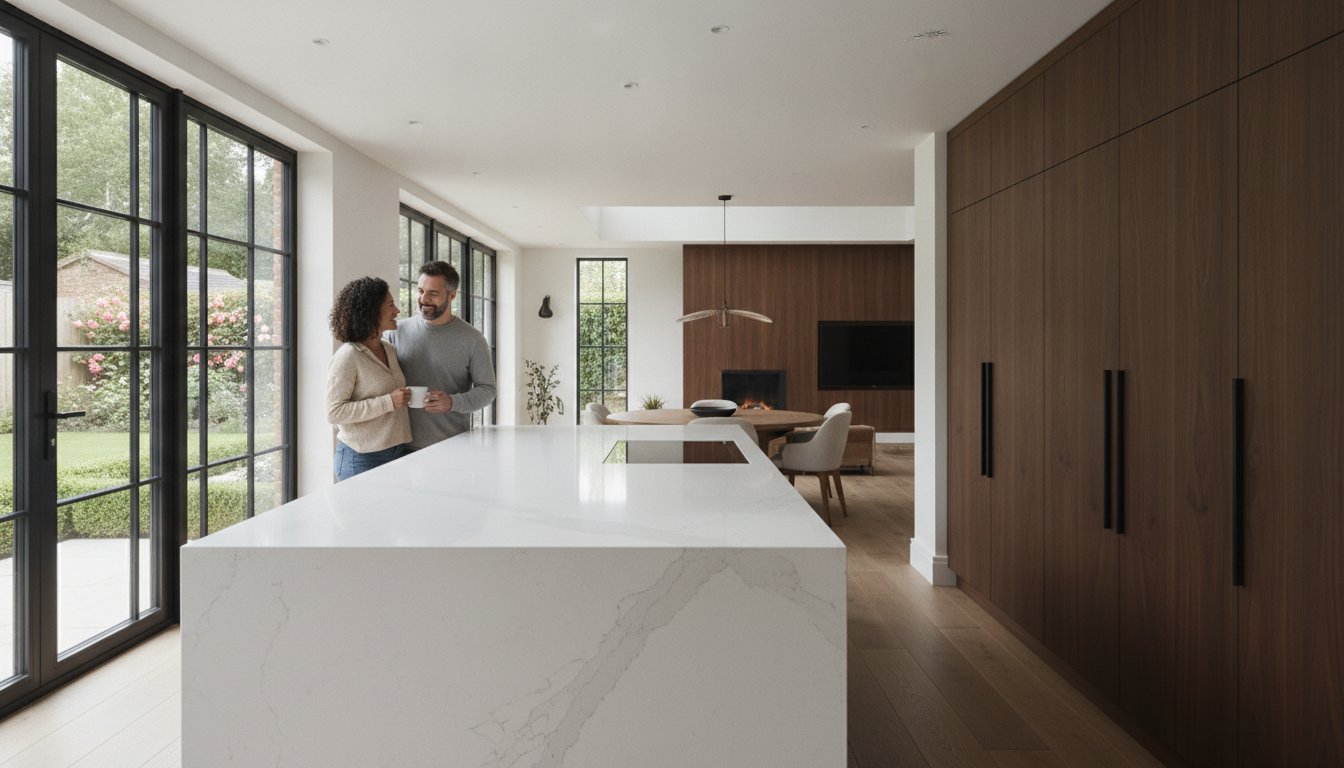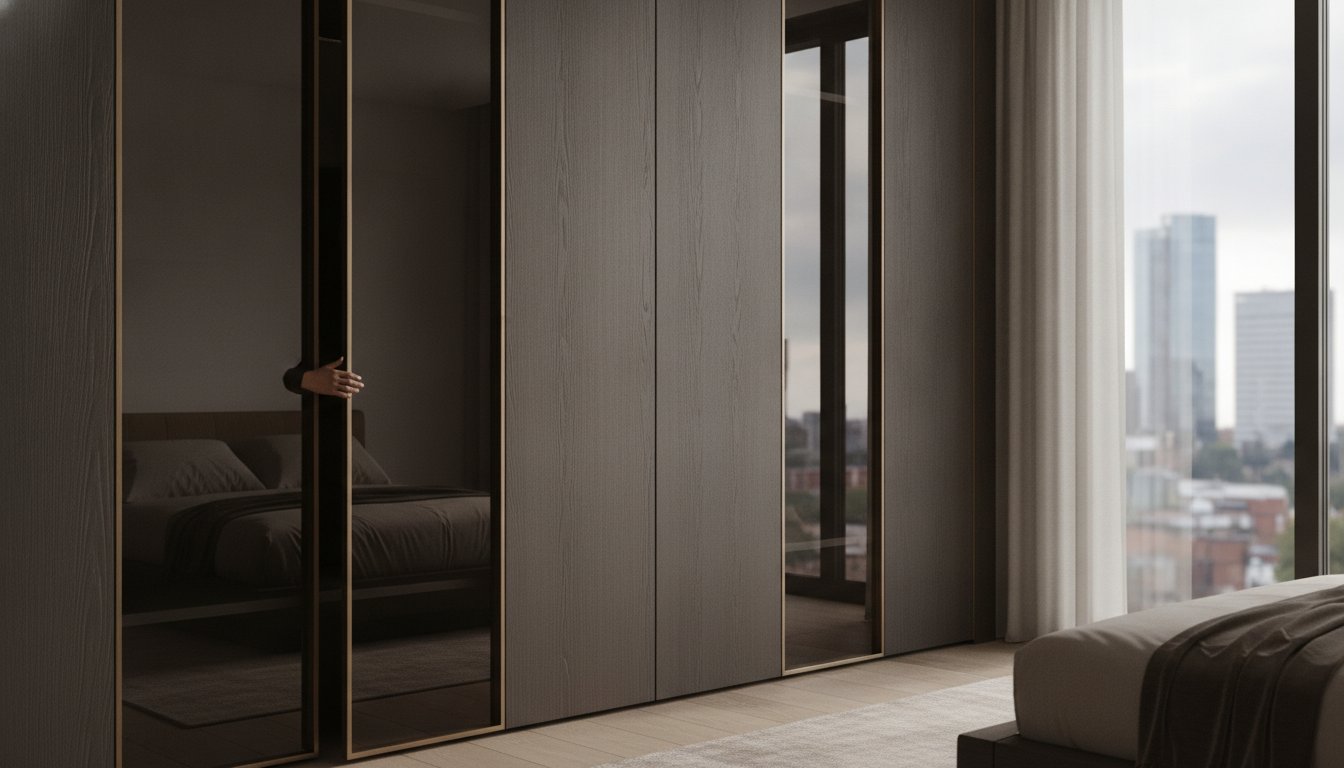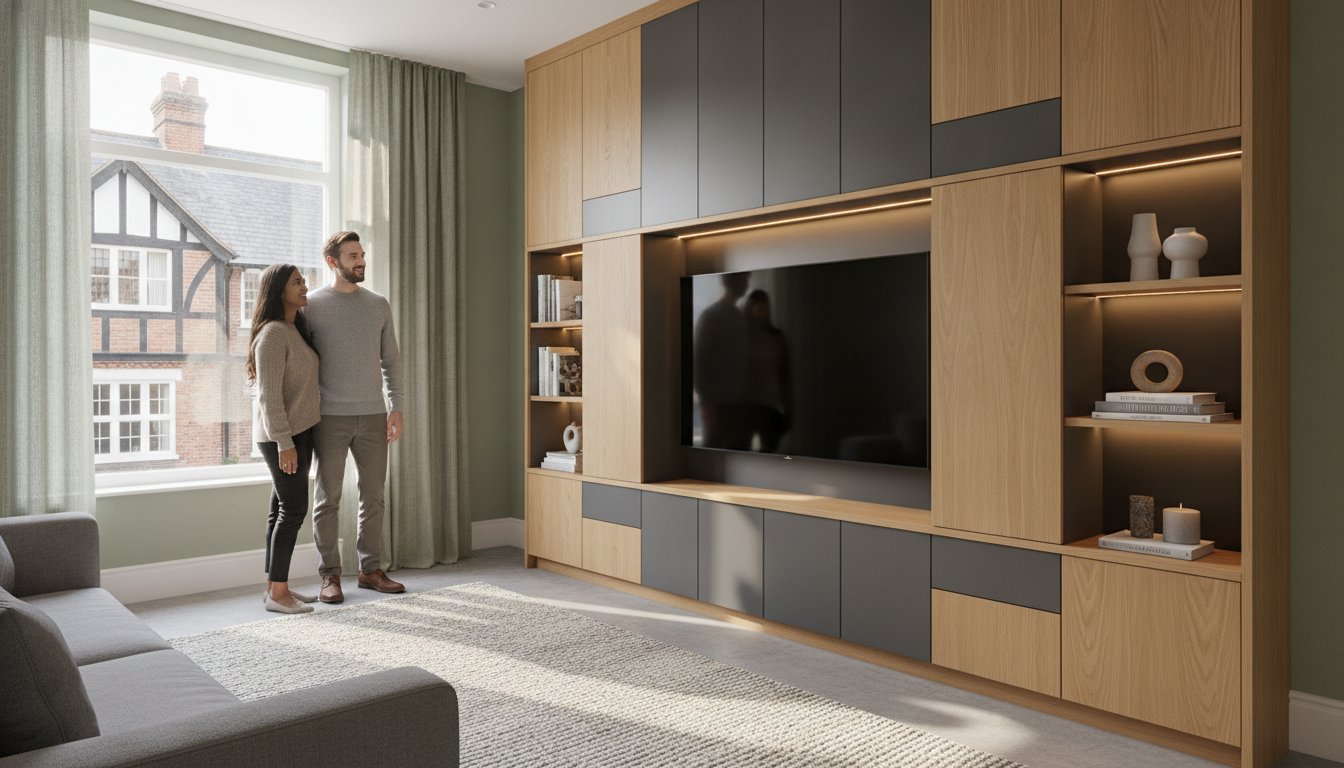

A bespoke home isn't built on blueprints alone; it's built on the absolute strength of a creative partnership. What if the difference between a stressful renovation and a seamless transformation was simply using a professional hiring an interior designer checklist to vet your options? You deserve a space that reflects your personal dream, yet the fear of aesthetic misalignment or unexpected costs can often cloud the excitement of a new project. It's time to be inspired by the possibilities rather than feeling overwhelmed by the technical complexity of a high-end build.
We believe that creating your ideal sanctuary should be an enjoyable and transparent journey. You've likely felt the pressure of ensuring every pound of your investment is well-spent while hoping your designer truly "gets" your unique style. This guide provides the essential framework you need to select a partner who aligns with your vision and values. We'll preview the vital steps for vetting technical skills, managing budgets, and establishing clear communication. Explore these steps to ensure your next project results in a home that's uniquely, beautifully yours.
Key Takeaways
- Define your lifestyle requirements and establish a clear investment range in £ GBP to ensure your project begins with calm confidence.
- Master the art of vetting portfolios and technical qualifications, such as BIID accreditation, to find your perfect creative soulmate.
- Navigate the selection process effortlessly using our hiring an interior designer checklist to uncover the most essential interview questions.
- Learn to finalise your partnership with a robust contract that prioritises bespoke furniture designs and transparent project milestones.
- Discover how to align your personal vision with a professional’s expertise to create the sophisticated interior of your dreams.
The Pre-Search Checklist: Defining Your Vision and Scope
It's time to be inspired. Your home is a canvas for your unique story, and the journey to a bespoke interior begins long before the first mood board is created. To ensure a seamless experience, you must first look inward. This hiring an interior designer checklist starts with a deep audit of your current lifestyle. Don't just think about how you want a room to look; think about how you actually live in it. Do you require a quiet sanctuary for morning reflection, or a vibrant space for hosting dinner parties for twelve? Understanding the flow of your daily life allows a professional to create a home that feels both beautiful and effortless.
Establish a realistic investment range before your first consultation. In the UK market, clarity on your budget is the foundation of a successful partnership. Whether your project requires £30,000 for a single room or £300,000 for a full property renovation, being honest about your figures prevents future heartache. Collect your inspiration anchors. These are the textures, fabrics, and images that evoke your dream feel. These anchors act as a visual language that helps you understand the role of an interior designer and how they will translate your abstract ideas into a physical reality. Finally, determine your desired level of involvement. Decide if you want to be hands-on, approving every bespoke handle, or if you prefer to hand over the keys and wait for the final reveal.
Setting Your Design Objectives
Clarity is the ultimate luxury. Differentiate between your absolute "must-haves" and your "favourite features" to provide your designer with a clear hierarchy of needs. You might require a dedicated home office for your 9-to-5, but simply desire a bespoke wine cellar. Identify specific problem areas that frustrate you daily, such as poor natural lighting in the lounge or a total lack of hallway storage. To ground your project, write a single sentence defining your ultimate goal. For example: "I want to transform my Victorian terrace into a light-filled, modern sanctuary that celebrates original craftsmanship."
Understanding the Luxury Interior Design Process
A bespoke transformation is a journey, not a quick fix. Familiarise yourself with the luxury interior design process to set realistic expectations for your project timeline. It is also vital to decide if you need an interior designer vs decorator. A designer handles the technical complexities of spatial planning and structural changes, while a decorator focuses on the aesthetic layers of styling and furniture. Clarify from the outset if your project involves moving walls and rewiring, or if you are seeking a refined update to your existing colour palette and furnishings. This hiring an interior designer checklist ensures you find the right expert for your specific aspirations.
Aesthetic Alignment: Finding Your Creative Soulmate
Finding the right creative partner is the most vital step in your journey. Your home is a private canvas for your personality. You need a designer who sees your vision clearly and elevates it. When you review a portfolio, look for a genuine breadth of work. A designer who only produces one "signature look" might struggle to adapt to your unique preferences. Seek out diversity instead. If they can transition from a sleek modern flat in London to a classic period home in the Cotswolds with ease, they possess true versatility. This versatility is a fundamental part of your hiring an interior designer checklist.
Consistency is equally important. High-quality finishes must be evident in every project. Examine the joinery carefully. Look at the way light interacts with the textures they've chosen. If you own a Grade II listed property, ensure they understand the nuances of heritage architecture. A designer who respects original 19th-century cornicing while introducing modern comforts is a rare find. They should also demonstrate a flair for bespoke elements. Custom cabinetry and tailor-made furniture transform a standard room into a personal sanctuary. These details often distinguish a premium service from a standard one.
Evaluating the Portfolio
Go beyond the surface level. A room might look beautiful in a professional photograph, but does it function for a real family? Look for signs of life. A well-designed space balances aesthetics with utility. Check the "hidden" details. High-end designers focus on the interiors of wardrobes and the layout of kitchen drawers with as much care as the wallpaper. Verify their experience with projects of a similar scale. If you're planning a £200,000 renovation, your designer must have a proven track record of managing similar budgets and technical complexities.
The Style Resonance Test
Ask yourself a simple question: "Could I wake up in this room every day?" If the answer is a resounding yes, you've found a potential match. During your initial consultation, listen to how they describe their process. A sophisticated designer speaks about light, shadow, and tactile materials with passion. They should understand how to hire an interior designer who aligns with your specific lifestyle needs and emotional goals. If you dream of a private library or a bespoke dressing room, ensure they have the technical expertise to deliver. It's time to be inspired by a professional who shares your standards of excellence. You can explore our bespoke interior services to see how we bring these intricate, personal visions to life.
The Technical Vetting: Qualifications and Supplier Networks
A bespoke home requires more than just a creative eye. It demands technical precision and professional accountability. Your hiring an interior designer checklist should begin with a verification of professional credentials. In the United Kingdom, membership in the British Institute of Interior Design (BIID) is a hallmark of quality. This ensures your designer adheres to a strict code of conduct and maintains essential Professional Indemnity and Public Liability insurance. These protections are vital for high-end residential projects where structural changes or significant investments are involved.
Technical proficiency is equally important. Ask your designer about their software capabilities. Modern luxury design relies on Computer-Aided Design (CAD) for precise floor plans and 3D rendering to help you visualise the final result. These tools allow you to explore a thousand new possibilities before any physical work begins. A designer who can produce detailed technical drawings ensures that contractors have a clear, error-free roadmap to follow.
Suppliers and Craftsmanship
The soul of a custom interior lies in its unique elements. You should specifically ask about their experience with complex joinery, such as bespoke kitchens and sliding door wardrobes. These features require a deep understanding of spatial planning and material durability. A sophisticated designer brings a curated network of talented makers who specialise in these high-end finishes. They don't just pick items from a catalogue; they collaborate with artisans to create something exclusive to your home.
Vetting tradespeople is a core part of their value. Professional designers work with trusted contractors they've tested on multiple sites over several years. To ensure excellence, the designer should personally oversee a quality control process that includes inspecting bespoke items at the workshop before they arrive at your property. This proactive approach prevents delays and ensures every finish meets a luxury standard.
Project Management and Logistics
A seamless transformation depends on rigorous project management. You need to know how they track the budget and communicate potential overspends. Professional designers often use project management platforms to provide transparent, real-time financial updates. They also take responsibility for the technical micro-decisions that define a room's functionality. This includes the precise placement of plug sockets, data points, and light switches, ensuring they're perfectly aligned with your furniture layout.
Logistics can be the most stressful part of a renovation. Your designer should manage the entire delivery schedule to minimise disruption to your household. They coordinate with contractors during scheduled site visits to resolve issues immediately. This level of organisation ensures that your journey toward a dream interior is as calm and inspired as the final result itself.
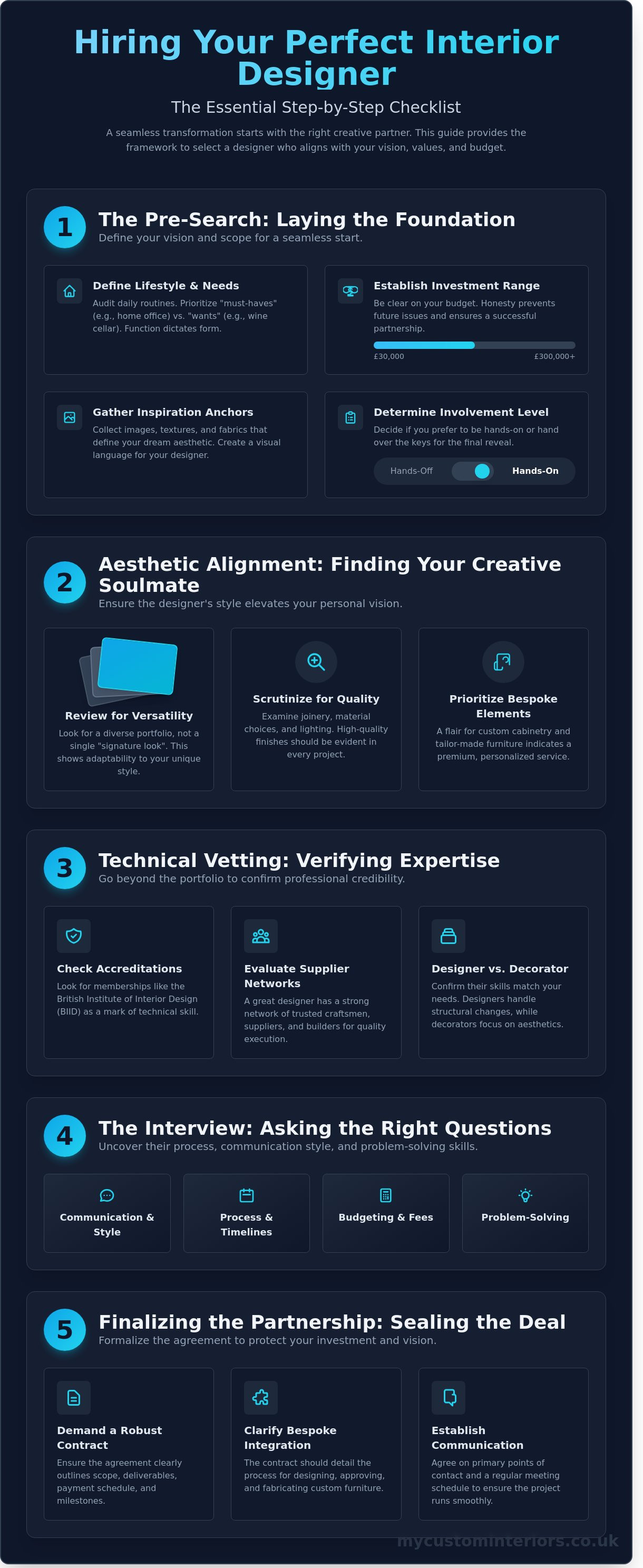
The Interview Checklist: 10 Essential Questions to Ask
Your hiring an interior designer checklist reaches its most critical point during the face-to-face interview. This is where your vision meets their expertise. It's a moment to look beyond the portfolio and understand the person behind the aesthetic. Start by asking how they select their projects. A high-end studio might only accept 5 or 6 commissions per year to ensure every detail remains bespoke. Ask about their current capacity. You deserve a partner who has the time to dedicate to your home's transformation.
Clarity regarding costs is vital for a seamless experience. Ask if they prefer a flat fee, an hourly rate, or a percentage of the total project spend. In the UK, percentage-based fees typically range from 10% to 20% depending on the project complexity. Request references from three clients who completed projects within the last 24 months. Speaking with former clients provides an honest look at how the designer handles the pressure of a live site.
Disagreements are a natural part of the creative process. Ask how they handle a situation where you don't love a proposal. A true partner views feedback as a tool for refinement rather than a hurdle. They should have a structured process for revisions that keeps the project moving forward without compromising the design integrity.
Communication and Chemistry
Chemistry is the foundation of every beautiful home. During your conversation, notice the balance of the dialogue. Do you feel heard, or is the designer dominating the space? Your home should reflect your soul, not just their signature style. Establish the rhythm of your partnership early. Ask if you'll receive weekly Friday updates or monthly in-person site reviews. Whether they prefer email, phone calls, or digital project boards, the method must align with your lifestyle.
Financial and Practical Alignment
Practicality ensures your dream stays on track. Clarify their policy on trade discounts. Some designers pass these savings directly to you, while others retain them as part of their management fee. Ask about their procurement process for bespoke furniture. With lead times for custom sofas or handcrafted cabinetry often reaching 12 to 16 weeks, their management of logistics must be impeccable. Define how scope changes are handled mid-way through to ensure your budget remains respected and transparent.
Ready to see what is possible for your home? It's time to be inspired.
Finalising the Partnership: Contract and Bespoke Integration
The final step in your hiring an interior designer checklist is the formalisation of your creative vision. A robust contract protects your investment. It must detail the exact scope of work and a transparent payment schedule. Most professional designers in the UK align their contracts with British Institute of Interior Design (BIID) standards. This provides a clear framework for professional conduct. You should expect a breakdown of fees, whether they're fixed sums or a percentage of the total project spend.
Confirm that every bespoke element is explicitly mentioned in the brief. Handcrafted kitchens and library shelving shouldn't be left to verbal agreements. A detailed timeline is essential. It should mark milestones for the initial concept, the procurement of luxury materials, and the final build phase. This structure prevents project creep. It keeps the transformation on track and ensures your home is ready when expected.
Agree on a formal sign-off process for designs and materials. This means you'll provide written approval for every fabric swatch, stone sample, and technical drawing before orders are placed. It's your safeguard against surprises. It ensures the final result matches the interior of your dreams.
Securing the Bespoke Details
Precision is the hallmark of luxury. Ensure your specification includes "made to measure wardrobes" and specific cabinetry details. The contract must state who takes the final measurements. Usually, the designer or the specialist joiner holds this responsibility. A "defects liability period" is a standard UK requirement. This often lasts 6 to 12 months after completion. It ensures any settling or minor issues in custom woodwork are rectified at no extra cost to you.
Starting the Journey
The official kick-off meeting is where the energy shifts. You'll align with all stakeholders and set the tone for the months ahead. Your designer will set up a shared digital folder or a project management platform. This keeps communication streamlined and transparent. It's time to be inspired. Your custom interior is moving from a dream into a tangible reality. Explore a thousand new possibilities as your bespoke space begins to take shape. Your journey toward a sophisticated, personalised home starts now.
Begin Your Journey to a Bespoke Home
Transforming your living space is a significant investment in your lifestyle and well-being. By following a comprehensive hiring an interior designer checklist, you ensure that every detail, from aesthetic alignment to technical vetting, remains perfectly in sync with your vision. Success lies in the balance between finding a creative soulmate and maintaining rigorous professional standards. It's about securing a partner who values your unique perspective as much as the structural integrity of the project.
At My Custom Interiors, we provide a premium UK-wide service dedicated to making your dream home a reality. We're specialists in bespoke kitchens and wardrobes, crafting spaces that combine elegance with effortless functionality. Our approach uncovers a thousand new possibilities for every home we touch, regardless of its size or location. You deserve a partnership that prioritises personalisation and sophisticated creativity at every turn, ensuring the final result is as functional as it is beautiful.
It’s time to be inspired: Explore our bespoke design services
Your ideal interior is waiting to be realised. Let's create something extraordinary together.
Frequently Asked Questions
When is the best time to hire an interior designer for a renovation?
You should hire an interior designer during the concept stage, ideally before you submit planning permission. Engaging a professional at RIBA Stage 2 ensures that spatial layouts and electrical points align perfectly with your lifestyle needs. This early collaboration prevents 15% of costly structural changes later in the build. It's time to be inspired by a vision that integrates seamlessly with your architectural plans from the very beginning.
Is it worth hiring an interior designer for a single room?
Hiring a designer for a single room is a valuable investment that ensures your most-used spaces reach their full potential. A bespoke design for a master suite or lounge can increase property appeal by up to 10% according to UK estate agent surveys. This focused approach allows you to explore a thousand new possibilities for a specific sanctuary. It's an essential step on your hiring an interior designer checklist to ensure every corner reflects your personal style.
What is the difference between an interior designer and an architect?
Architects focus on the structural integrity and external shell of a building, while interior designers curate the internal experience and aesthetic flow. In the UK, architects must be registered with the Architects Registration Board (ARB). Interior designers specialise in human-centric details like bespoke cabinetry, lighting schemes, and material palettes. Together, they form a partnership that transforms a house into the interior of your dreams.
How do interior designers charge for their services in the UK?
UK interior designers typically charge via a fixed project fee, an hourly rate ranging from £50 to £150, or a percentage of the total spend. The Society of British and International Interior Design (SBID) notes that percentage-based fees usually sit between 10% and 20% of the project cost. Clear financial structures ensure your journey remains calm and transparent. You'll find these fee structures detailed in any professional hiring an interior designer checklist.
Should I buy my own furniture or let the designer handle procurement?
Letting your designer handle procurement is often more efficient because they access trade-only suppliers and manage all complex logistics. Designers frequently secure discounts of 10% to 30% that aren't available to the general public. They also oversee quality control and coordinate deliveries, saving you approximately 40 hours of admin per room. This bespoke service ensures your home features unique pieces that elevate the overall aesthetic.
What happens if I don’t like the initial design proposal?
Most design contracts include two or three rounds of revisions to ensure the final concept aligns perfectly with your vision. It's a collaborative journey where your feedback shapes the outcome. Open communication during the initial briefing stage reduces the need for major changes by 80%. Your satisfaction is the priority as we work together to create an interior that resonates with your soul.
Can an interior designer help with bespoke furniture like wardrobes and kitchens?
Professional designers specialise in creating bespoke joinery, including custom kitchens and fitted wardrobes, to maximise your home's storage and style. They provide detailed technical drawings for master craftsmen to execute. Research from Houzz UK indicates that 42% of homeowners now prioritise custom storage solutions in their renovations. This tailored approach ensures your home is as functional as it is beautiful.
How long does the typical interior design process take from start to finish?
A standard residential project usually takes between 12 and 24 weeks from the initial consultation to the final installation. The design phase typically occupies the first 4 to 8 weeks, followed by procurement and lead times for bespoke items. Larger renovations involving structural changes can extend to 12 months or more. It's a steady, unhurried process designed to deliver the interior of your dreams without compromise.