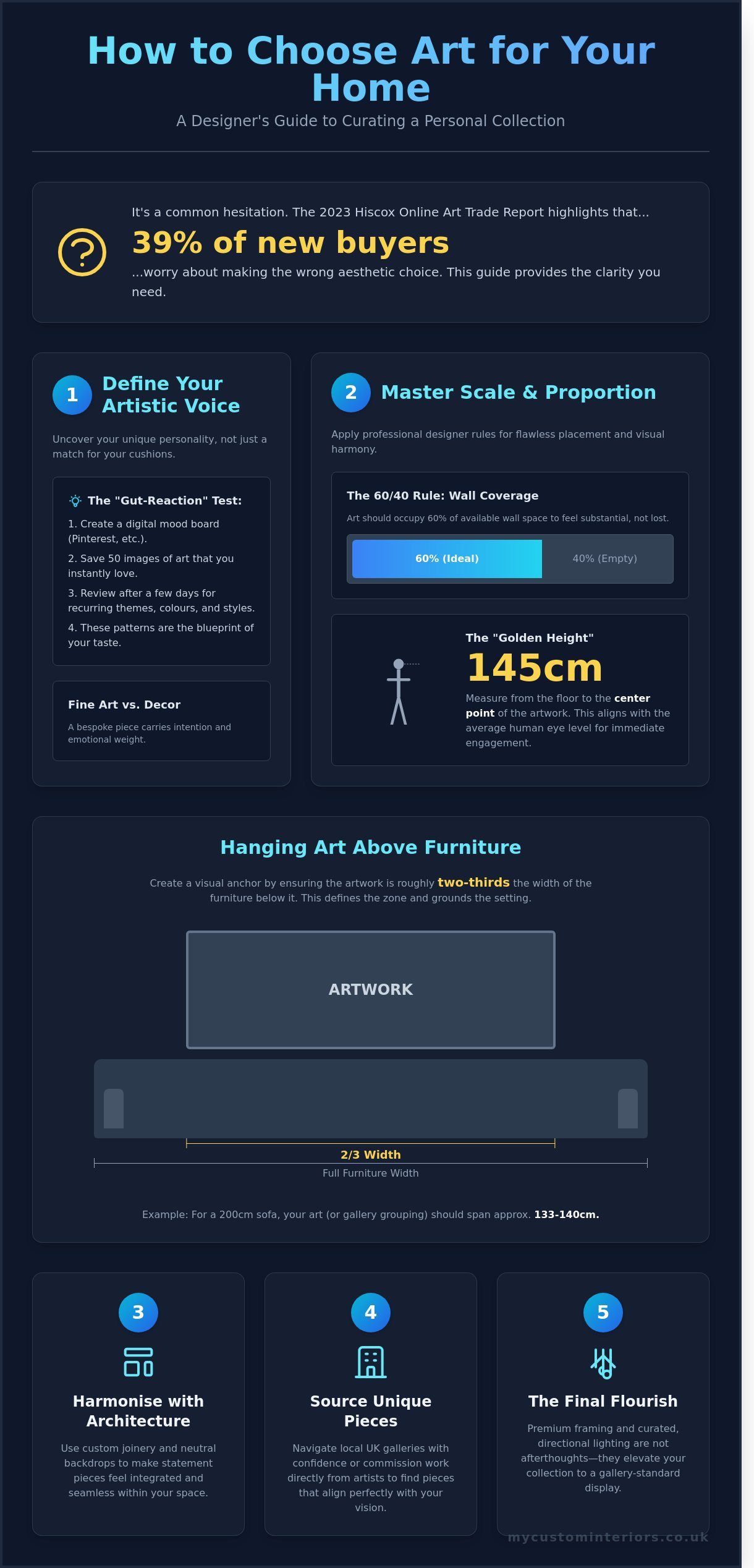
What if the most significant investment in your home isn't the bespoke cabinetry or the velvet sofa, but the silent conversation happening on your walls? It's a common hesitation; the 2023 Hiscox Online Art Trade Report highlights that 39 per cent of new buyers worry about making the wrong aesthetic choice. You likely already know that a home only feels truly finished when it reflects your unique journey, yet the challenge of how to choose art for your home can feel like a barrier to that final, polished result.
It's time to be inspired by the possibilities of your own space. We'll show you how to select, scale, and position artwork that harmonises perfectly with your custom furniture while telling your personal narrative with confidence. From understanding the delicate balance of proportions to visiting a London gallery with a designer's eye, this guide provides the clarity you need to curate a collection you'll love for a lifetime. We'll explore the essential rules of curation, the logistics of lighting, and the art of trusting your creative intuition.
Key Takeaways
- Define your artistic voice by using digital mood boards to uncover recurring themes that reflect your unique personality rather than just matching cushions.
- Master the professional 60/40 rule and the 145cm "golden height" to understand exactly how to choose art for your home with flawless scale.
- Discover how to harmonise statement pieces with bespoke architecture, using custom joinery and neutral backdrops to create a seamless, sophisticated aesthetic.
- Navigate local UK galleries and the commissioning process with confidence to secure unique works that align perfectly with your personal vision.
- Learn how premium framing and curated lighting serve as the final flourish to elevate your collection into a gallery-standard display.
Finding Your Artistic Voice: How to Define Your Personal Style
Your home is a canvas for your life. It's a sanctuary where every object should resonate with your unique spirit. Choosing art isn't about finding a piece that perfectly matches your sofa cushions; it's about finding a piece that speaks to your soul. When you consider how to choose art for your home, start by looking inward. Art is a reflection of your personality, your history, and your dreams.
To identify your style, try the "Gut-Reaction" test. Create a digital mood board on Pinterest or Instagram and save fifty images of art that immediately catch your eye. Don't overthink the process. After a few days, review your collection. You'll likely notice recurring themes. You might be drawn to specific Elements of Art, such as bold, geometric lines or soft, ethereal textures. These patterns are the blueprint of your artistic voice.
Understanding different genres helps you categorise these preferences. Abstract works often focus on mood and emotion through colour. Impressionism captures the fleeting beauty of light. Modern photography can ground a space in reality or transport you to a distant memory. Your collection should tell a story. Perhaps it's a sketch from a trip to the Scottish Highlands or a piece that honours your family heritage. Art should be an invitation to explore a thousand new possibilities within your own four walls. It's time to be inspired by your own surroundings.
The Difference Between Decor and Fine Art
Mass-produced wall fillers serve a functional purpose, but they often lack the emotional weight of fine art. Inspired pieces carry a sense of intention. To spot quality in the UK market, look for the depth of pigment in a giclee print or the visible brushwork on an original canvas. Fine art isn't just an aesthetic choice; it's a connection to the artist's vision. Choosing a bespoke piece ensures your home feels curated rather than merely decorated.
Identifying Your Colour and Mood Preferences
Use your existing elegant interior colour palettes as your foundation. Art can behave in two ways: it can harmonise with your room to create a monochromatic calm, or it can act as a bold accent. Consider the energy of the space. A serene landscape might be perfect for a master suite in a London townhouse, while a vibrant, energetic abstract piece could transform a contemporary dining area. Match the artwork's vibration to the room's purpose to achieve a seamless flow. Every wall offers a new opportunity to realise the interior of your dreams.
Mastering Scale and Proportion: The Designer’s Rules for Placement
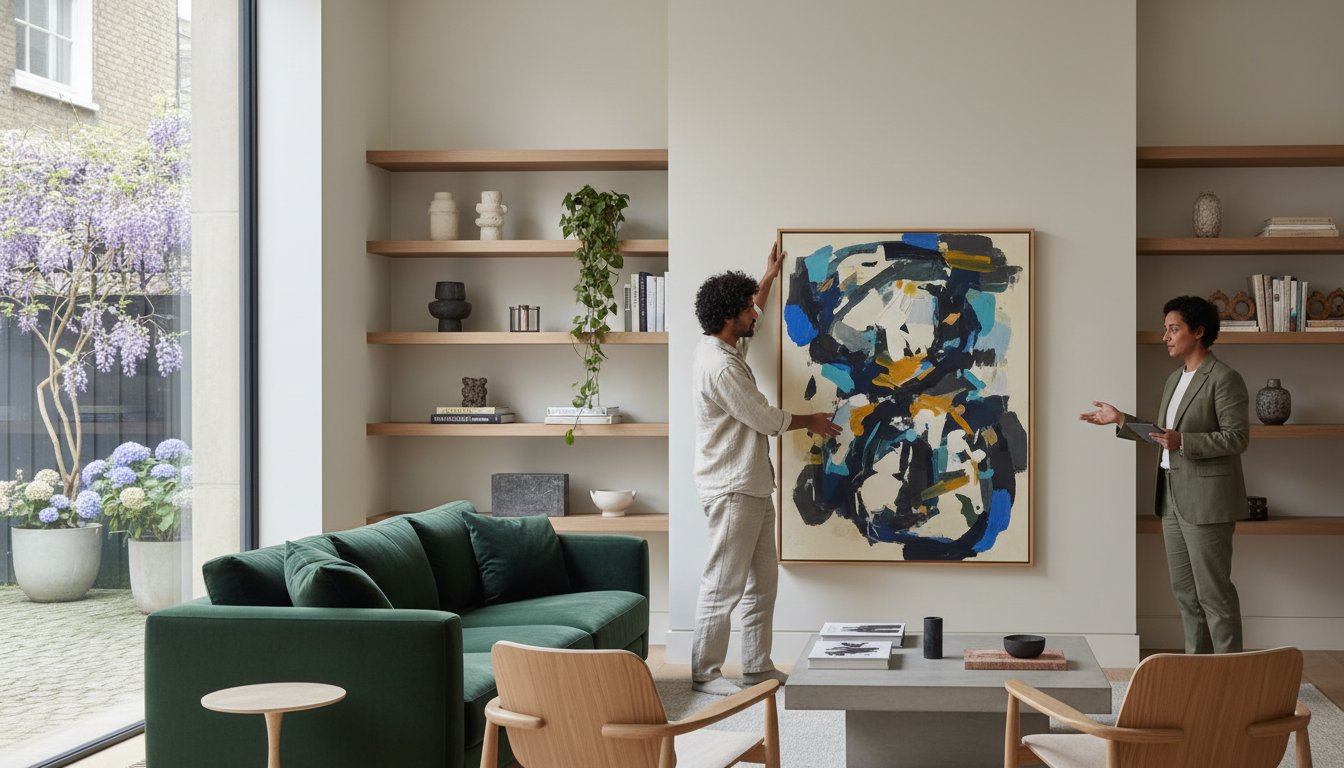
Understanding scale is the essential difference between a room that feels decorated and one that feels curated. When you consider how to choose art for your home, you must treat the wall itself as a primary design element. The 60/40 rule serves as your foundation. This principle dictates that your art should occupy approximately 60% of the available wall space. If a piece covers less than 40%, it often looks lost or undersized. Large statement pieces provide a sense of calm confidence, while smaller works require grouping to maintain their visual impact.
Height is the next critical factor in achieving a professional finish. Professionals almost universally use the "golden height" of 145cm. This measurement represents the distance from the floor to the centre point of the artwork. It aligns with the average human eye level, ensuring the piece engages the viewer immediately without causing strain. You should avoid the common "floating art" mistake. This happens when a single small frame sits isolated in the middle of an expansive wall. It lacks the gravity needed to hold the room together and can make a premium space feel unfinished.
Hanging Art Above Furniture
Positioning art above a sofa, sideboard, or bespoke console requires a specific mathematical ratio. Aim for the artwork to be roughly two-thirds the width of the furniture below it. For a standard 200cm sofa, your art or grouping should span approximately 133cm to 140cm. This creates a visual anchor that grounds the seating area and prevents the furniture from feeling disconnected from the architecture. In large, open-plan living spaces, this alignment is vital for defining specific zones and creating a sense of intimate purpose within a vast area.
Creating a Sophisticated Gallery Wall
A gallery wall offers a unique opportunity to layer textures in interior design by mixing varied frame styles and mounting depths. You don't need to stick to flat canvases. Incorporating 3D objects, ceramic wall plates, or framed textiles adds a sophisticated depth that traditional paintings alone cannot achieve. Always plan your layout on the floor before making a single hole in the wall. Use paper templates to test the flow and ensure the spacing between frames remains consistent, typically between 5cm and 8cm. This methodical approach ensures your dream interior remains polished and intentional. It's time to be inspired by the items you already own and see how they might live together in a new, cohesive arrangement. If you're looking for more ways to elevate your space, you can view our gallery to explore a thousand new possibilities for your home.
Art and Bespoke Architecture: Harmonising with Custom Joinery
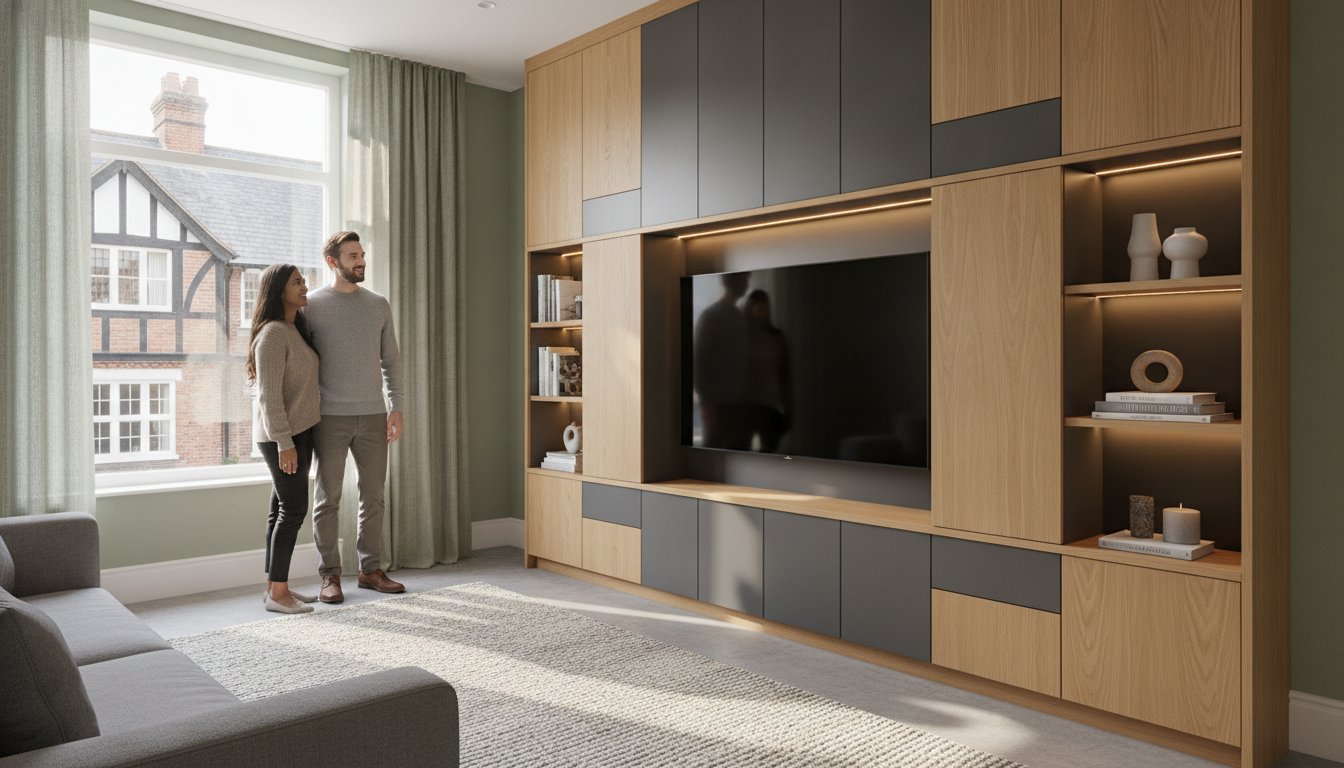
Bespoke joinery does more than organise a room. It frames your life. When you integrate art into custom-built library shelving or media units, the furniture becomes a gallery. Think of your shelving as a series of curated stages. A deep 300mm shelf provides the perfect depth for smaller canvases or sculptural pieces to sit alongside leather-bound volumes. It's about balance. You can hide the television behind motorised sliding panels to ensure the art remains the focal point of your living space.
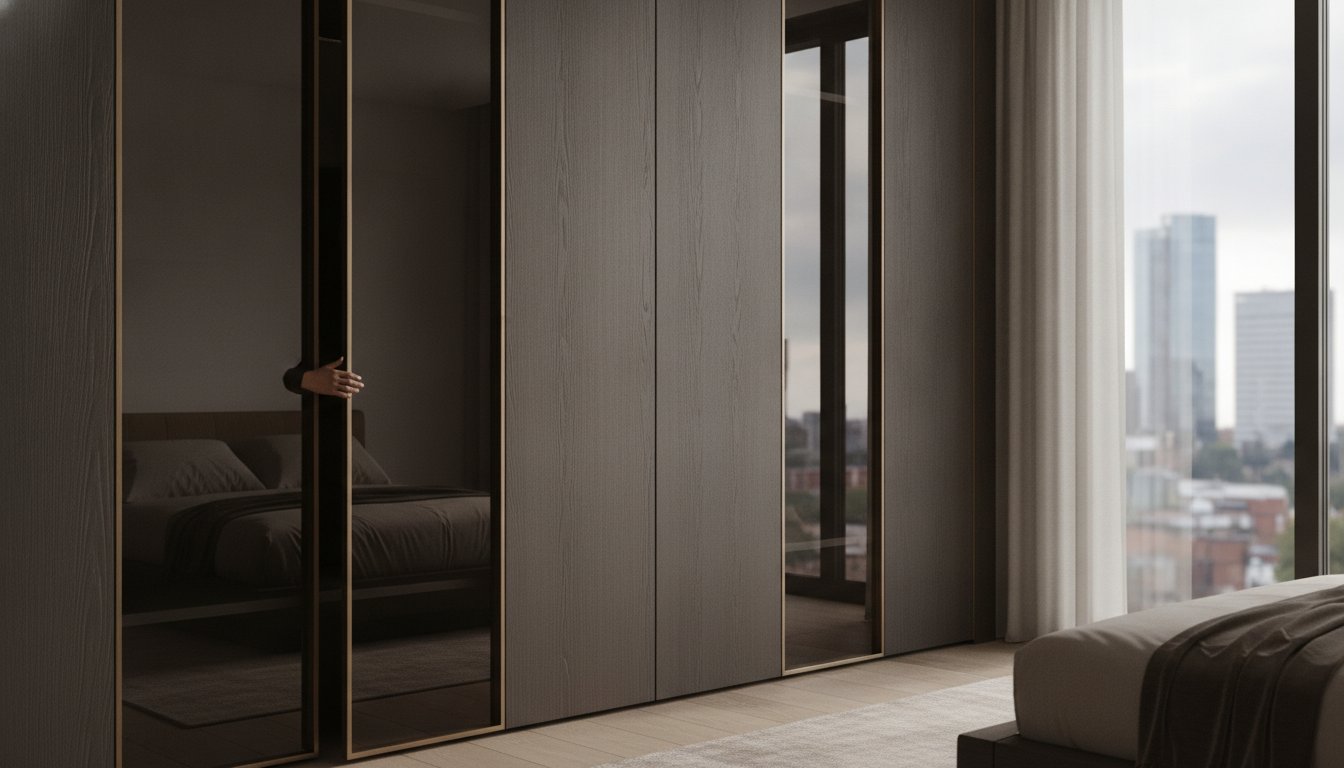
Sliding door wardrobes offer a unique opportunity for display. A minimalist, matte-finish wardrobe acts as a neutral backdrop for statement floor-standing art. Leaning a large-scale abstract piece against a sleek wardrobe wing adds texture and breaks up long vertical lines. This approach makes your storage feel like a deliberate design choice rather than just a utility. Mastering how to choose art for your home involves looking at these architectural "dead zones" and seeing them as potential highlights.
Bespoke alcove solutions are particularly effective in British homes with traditional chimney breasts. Instead of standard shelving, consider a single, floating plinth illuminated by a recessed LED spot with a high Colour Rendering Index (CRI) of 90 or above. This ensures the colours of your artwork stay true and vibrant. These small architectural interventions turn awkward corners into mini-galleries that draw the eye and invite conversation.
Art in the Master Suite
Your bedroom is a private sanctuary. Positioning art in relation to custom headboards creates a sense of grounded luxury. Use soft, ethereal artistic choices like muted watercolours or delicate charcoal sketches to encourage a restful atmosphere. Symmetry plays a vital role here. Placing identical frames on either side of a bespoke walk-in wardrobe entrance establishes a rhythmic, orderly feel. It's about creating a space that feels both personal and professionally curated.
The Kitchen and Dining Narrative
The kitchen is the heart of the home, but it's also a challenging environment for delicate works. When deciding how to choose art for your home kitchen, focus on durability. Use anti-reflective UV glass and sealed frames to protect pieces from steam and sunlight. A curated vignette on a bespoke dresser or a small oil painting tucked into a breakfast nook adds unexpected warmth. In the dining room, large-scale works can define the "centre" of a multi-functional space, acting as a visual anchor that separates the cooking zone from the social area. Frame your pieces at eye level when seated to ensure they remain a part of the dinner table conversation.
- Use moisture-resistant backing for kitchen-based art.
- Install dimmable picture lights to shift the mood from day to night.
- Select frame finishes that complement your custom cabinetry hardware.
It's time to be inspired by the possibilities of your own walls. Every niche and every custom unit is an invitation to express your unique vision. Your home is a canvas, and bespoke joinery provides the perfect frame.
Building a Collection: Sourcing and Commissioning Unique Pieces
Creating a truly personal gallery within your walls is a journey, not a sprint. The most evocative homes feature collections built over years, blending different eras, mediums, and price points. When considering how to choose art for your home, look beyond the high street. Visit independent galleries in locations like St Ives or London’s Shoreditch. Attend the Affordable Art Fair in Battersea, where you can discover original works starting from £50. This tactile experience allows you to see the brushwork and feel the energy of the piece in person.
Investing in emerging talent from institutions like the Royal College of Art offers a thrilling opportunity to support artists at the start of their careers. These pieces often carry a lower price tag, perhaps between £300 and £1,000, but offer significant emotional and aesthetic value. Established names provide a sense of history and stability, yet a balanced collection thrives on the unexpected. Mix a contemporary abstract with a traditional landscape to create a dialogue between different styles.
- Visit graduate shows for fresh perspectives and accessible price points.
- Focus on one room at a time to avoid a disjointed aesthetic.
- Trust your instinct; a piece should move you before it matches your sofa.
The Commissioning Process
Commissioning a bespoke piece is the ultimate way to realise your vision. It's a collaborative dance between your aspirations and the artist's skill. Provide a clear brief that includes your room's dimensions, the direction of natural light, and your preferred colour palette. Most artists require a 50% deposit to begin, with timelines ranging from four weeks to six months. The result is a one-off masterpiece tailored specifically to your sanctuary. It's a signature of your individuality that no one else can replicate.
Sourcing Art Digitally
The digital landscape has transformed how we acquire British art. Platforms like Artfinder or Saatchi Art allow you to filter by size, price, and medium from your own home. To judge texture through a screen, request high-resolution close-ups or a video of the work in natural light. Always verify the seller’s return policy. Under the UK’s Consumer Contracts Regulations, you typically have a 14-day cooling-off period to return items bought online. This protection ensures you can see the piece in your space before making a final commitment.
Your home deserves a soul. It's time to be inspired by the vast possibilities of a curated collection. If you're ready to transform your space with bespoke design, explore our interior services to begin your creative journey.
The Final Flourish: Framing, Lighting, and Display
The journey doesn't end once you've discovered how to choose art for your home. The way you present your collection determines its final impact. A masterfully selected piece can lose its soul in a poor frame or under harsh lighting. It's time to be inspired by the details that transform a simple wall into a gallery-grade experience. Thoughtful curation is about more than just the image; it's about the environment you create around it.
Professional Framing Secrets
A bespoke frame acts as a bridge between the artwork and your architecture. It allows a piece to sit perfectly within a luxury interior design portfolio, harmonising with your existing aesthetic. Use mount boards to provide breathing space. A 5cm to 10cm border prevents the art from feeling cramped and draws the eye inward. Match your frame finishes to your custom cabinetry or hardware for a cohesive look. This level of personalisation ensures your home feels intentional and refined.
- Floating Frames: These are perfect for canvases, creating a 5mm gap that makes the art appear to hover within the wood.
- Traditional Gilt: Hand-finished gold leaf adds warmth and historical weight to classical oil paintings.
- Minimalist Modernism: Slim black or white wood frames provide a clean edge that doesn't distract from contemporary works.
Lighting for Atmosphere
Lighting is the secret to depth. For oil paintings, use adjustable spotlights to highlight the impasto and physical texture of the paint. Choose warm light, typically around 2700K, to create a cosy, inviting atmosphere in living rooms. Cooler light, often above 4000K, suits modern photography but can feel clinical if overused. To avoid glare on glass-fronted pieces, position lights at a 30-degree angle from the wall. This reduces reflections and ensures the colours remain vivid from every corner of the room.
Protecting your investment is vital in the UK climate. High humidity levels, which often fluctuate between 50% and 70% in British homes, can cause paper art to ripple or "cockle" over time. Always specify UV-protective glass for framed works. This blocks 99% of harmful rays, preventing the fading that occurs even on overcast London afternoons. Your collection deserves to last for generations. Every choice you make now secures its future beauty. Explore the possibilities of your space and let your art shine. When you understand how to choose art for your home, the final display becomes your personal signature.
Bring Your Vision to Life
Your home is a canvas for your personal story. Mastering how to choose art for your home means balancing the 57-inch gallery hanging rule with the unique proportions of your architecture. It's about more than just aesthetics; it's about how a piece interacts with bespoke joinery and the specific lighting of a room. Whether you're sourcing a unique commission or framing a cherished find, every detail contributes to a sense of calm confidence. Expert curation ensures your collection feels intentional rather than accidental.
At My Custom Interiors, we bring over 15 years of bespoke furniture expertise to every project. We understand that a truly inspired home requires a perfect harmonising of art and architecture. Our team acts as a design authority, helping you navigate the delicate relationship between custom cabinetry and curated collections. We're committed to your personal dreams and the specific vision you have for your living space. It's time to be inspired by a home that reflects your individuality.
Explore a thousand new possibilities for your home with My Custom Interiors
Your dream interior is waiting to be realised.
Frequently Asked Questions
How do I know if a piece of art is the right size for my wall?
A piece of art should ideally occupy 60% to 75% of the available wall space or the width of the furniture positioned below it. For a standard 200cm sofa, look for a canvas or a gallery arrangement measuring between 120cm and 150cm wide. This ensures the proportions feel balanced and intentional within your room. It's the first step in learning how to choose art for your home that feels truly bespoke.
Can I mix different styles of art in the same room?
You can absolutely mix different art styles to create a rich, layered aesthetic that reflects your unique personality. Combining a 19th-century oil portrait with a minimalist 2024 abstract print adds depth and visual interest to your collection. The key is to find a unifying element, such as a consistent colour palette or similar framing materials, to harmonise the disparate pieces. It’s time to be inspired by the endless possibilities of eclectic curation.
Is it okay to hang art in a kitchen or bathroom?
Art is perfectly suitable for kitchens and bathrooms provided you select the right medium and protection. In high-moisture areas, avoid original watercolours or unsealed canvases that can warp; instead, opt for framed prints behind glass or acrylic-mounted photography. A 2023 study on interior wellness suggests that art in functional spaces can reduce daily stress levels by 15%. Ensure your frames are sealed tightly to prevent dampness from affecting the paper.
How high should I hang my artwork above a sofa?
The bottom of your frame should sit between 15cm and 20cm above the top of the sofa back. This creates a cohesive visual unit rather than two disconnected elements floating on the wall. If you’re hanging a gallery wall, treat the entire grouping as one single piece and apply the same measurement. This precise spacing is essential when considering how to choose art for your home that looks professionally curated.
Should the frame match the furniture in the room?
Your frames don't need to match your furniture perfectly, as a slight contrast often creates a more sophisticated and curated look. While a mahogany frame might complement a traditional desk, a sleek black or oak frame can provide a modern edge to a classic room. Focus on the mood of the art itself. A 2022 design survey showed that 70% of luxury interiors now favour mixed metal and wood finishes for a more personalised feel.
What is the best way to start an art collection on a budget?
Starting a collection on a budget begins with exploring limited edition prints, graduate art fairs, or digital downloads. You can find original works from emerging British artists for under £200 at events like the Affordable Art Fair. Investing in high-quality framing can make a £50 vintage poster look like a gallery masterpiece. It's about finding the interior of your dreams through patience and a keen eye for emerging talent.
How do I choose art for a dark room with limited natural light?
Choose vibrant colours or reflective mediums like glass-fronted frames and metallic accents to brighten a room with limited natural light. Works with a high Light Reflectance Value (LRV) help bounce what little light is available around the space. Avoid dark, moody oils that can disappear into the shadows. Pieces featuring white backgrounds or neon elements can act as a secondary light source, transforming a dim corner into a focal point of your home.